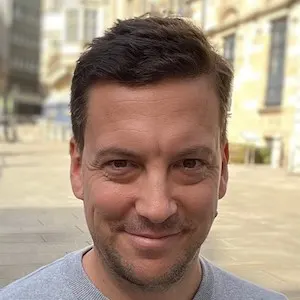
I am a Ph.D. student in the Security Lab at the University of California - Santa Barbara (department of Computer Science.)
My research focuses on malware and deniable communication.
In the past, I've worked in different fields, including Robotics, Autonomous Underwater Vehicles, Wireless Sensor Networks and Real Time Systems.
I'm also involved in the Linux GNOME community, as a developer and maintainer.
You can contact me at:
Don't hesitate to encrypt/sign your email, if needed. My public key is available here. The key is also embedded in this page: you can import it executing
wget -O - http://lucainvernizzi.net|gpg --import
I'm available on
Skype, under the
username
l.invernizzi.
GTG is an application for
the GNOME desktop
(that is, on GNU/Linux or *Bsd) that let's you
simplify you life by organizing the things you should do. It's,
so to speak, Google Tasks on steroids, as it can store your
tasks on multiple web services, parse your email and twitter feed
to look for tasks, but also import the bugs assigned to you from popular
code-management systems, generate custom reports and so on.
GTG has received a lot of attention, and it's now one of the fifteen recommended applications in Ubuntu's Software Centre.
Since 2009, I'm one of the main developers of GTG. I've also worked on adding the ability to store and pull tasks from multiple sources as a Google Summer of Code project in the summer of 2010.
I've been a member of the pESApod team of the Scuola Superiore Sant'Anna, which took part in the ESA LRC competition. That competition was about creating a remotely controlled robot capable of descending into a steep crater in a lunar-like environment, collect some rocks and come back. Our team was among the finalist that were invited to the last challenge in Tenerife.
My focus was on communications aspects, implementing a multi-hop network to guarantee a reliable communication between the tele-operated robot and its base station. I've also developed a software (written in python with the openCV libraries) that applies some image compression, motion detection and tracking techniques to reduce the network load.
The pdf of our proposal is available for
download.
Videos of the robot can be seen here
and here.
Player/Stage is a software framework for
research in the field of moving robots. It can handle both simulated and real robots, has a nice GUI and it's
an open source project, which is an awesome thing.
I've implemented a driver for Joey Durham's Smooth Nearness Diagram Navigation algorithm, which performs real-time obstacle avoidance. I've tested it both on simulated robots and on the Erratic robot. The driver is now part of Player/Stage, and can be downloaded along with the core code.